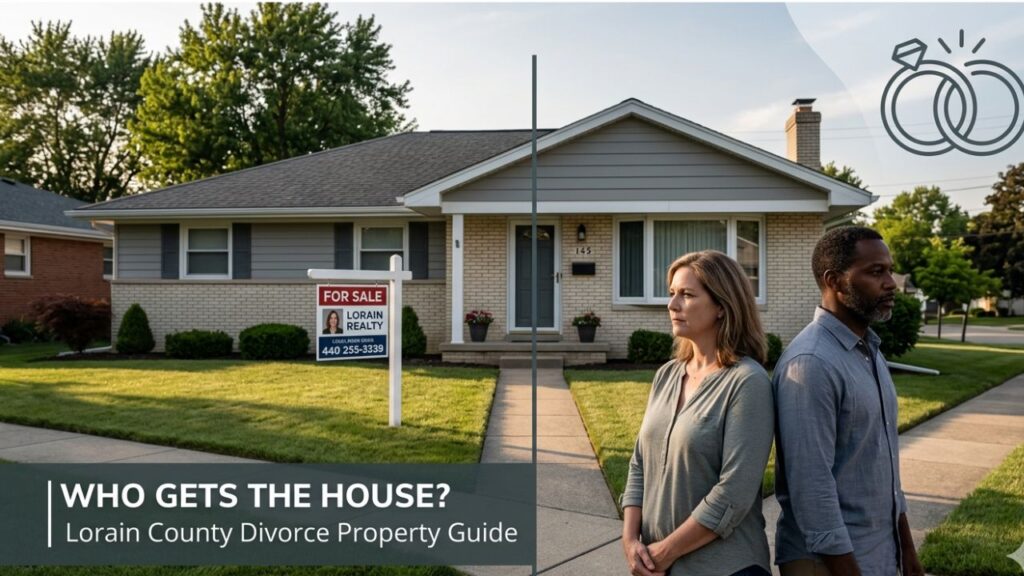
Divorce is never easy, and for many Lorain County residents, the family home is more than just an asset it’s a collection of memories and their largest financial investment. When a marriage ends, the most pressing question is often: “Who gets to keep the house?”
In Ohio, property division isn’t a simple coin toss. The process is governed by specific state laws and local court procedures at the Lorain County Domestic Relations Court. This guide will walk you through how the legal system decides the fate of your real estate and the steps you can take to protect your interests.
Understanding Ohio’s “Equitable Distribution” Rule
Unlike some states that mandate a strict 50/50 split, Ohio follows the principle of Equitable Distribution. This means the court aims for a division that is fair, though not necessarily equal.
Marital Property vs. Separate Property
Before a judge can divide anything, they must categorize the home.
- Marital Property:
Generally, any home purchased during the marriage is considered marital property, regardless of whose name is on the deed or mortgage. - Separate Property:
If you owned the home before the wedding, or received it as a specific gift or inheritance during the marriage, it may be classified as separate property.
Local Insight:
Even if the home is “separate,” if marital funds were used for the mortgage or renovations (like a kitchen remodel in Amherst or a new roof in Elyria), your spouse may be entitled to a portion of the increased value.
Key Factors Lorain County Judges Consider
When spouses cannot agree on a settlement, a judge at the Lorain County Justice Center will step in. They evaluate several factors to determine a fair outcome:
The Best Interest of the Children
If you have children attending local schools like those in the Avon Lake or North Ridgeville districts, the court often prefers to maintain stability. The custodial parent may be granted the right to stay in the home until the youngest child graduates.
Financial Standing and Earning Power
The court looks at each spouse’s ability to maintain the home. If one spouse cannot afford the property taxes, insurance, and maintenance on their own, the court is unlikely to award them the house without a clear plan for a buyout or refinance.
Duration of the Marriage
Long-term marriages often result in a more balanced split of assets, whereas shorter marriages might see the court attempting to return each person to the financial position they were in before the wedding.
3 Common Solutions for the Family Home
In Lorain County divorces, the resolution typically falls into one of these three categories:
| Solution | How it Works | Best For… |
| The Buyout | One spouse keeps the house and pays the other for their share of the equity. | Couples where one person wants to stay and has the credit to refinance. |
| Sell and Split | The house is listed on the market, and the net proceeds are divided. | Couples looking for a clean break and a fresh start. |
| Deferred Sale | Both stay on the title for a set period (e.g., until kids graduate), then sell. | Parents prioritizing school district stability over immediate liquidation. |
Step-by-Step Guide to Protecting Your Rights
If you are facing a property dispute, follow these steps to ensure you are prepared for the legal process:
- Determine Your Home’s Value:
Don’t guess. Use the Lorain County Auditor’s website for a baseline, but hire a professional appraiser for an accurate “fair market value.” - Calculate the Equity:
Subtract your remaining mortgage balance from the appraised value. This “equity” is what will actually be divided. - Audit Your Contributions:
Gather receipts for any improvements you paid for using non-marital funds (like an inheritance). - Check the Deed:
Verify exactly how the title is held. You can pull these records through the Lorain County Recorder’s Office. - Consult a Local Expert:
Family law is nuanced. A Lorain-based attorney who understands the local court’s tendencies is invaluable.
Final Thoughts
The house is often the most emotional part of a divorce, but it is also a business transaction. By focusing on the facts appraisals, equity, and Lorain County legal standards you can move toward a resolution that protects your financial future.
Disclaimer: This article provides general information and is not legal advice. For specific legal concerns regarding your divorce, please contact a qualified attorney in Lorain County, Ohio.
FAQs
Can I change the locks if my spouse moves out?
In Ohio, you generally cannot bar your spouse from the marital home without a court order (like a Motion for Exclusive Possession), even if they have moved into an apartment.
Will I lose my house if I committed “fault” in the divorce?
Ohio is a “no-fault” divorce state. While behavior like financial misconduct (wasting marital funds) can affect property division, things like infidelity usually do not impact who gets the house.
How do property taxes affect the split?
In Lorain County, property taxes are paid in arrears. You must negotiate who will pay the upcoming tax bill during the “pro-ration” phase of your settlement.
What if I bought the house before marriage but we both paid the mortgage?
This is a very common scenario in Lorain County. If you owned the home prior to the marriage (Separate Property), but used marital income (income earned during the marriage) to pay down the mortgage or make improvements, the home undergoes what is called “transmutation.” While you may keep your original equity, the portion of the home’s value that increased due to joint financial efforts is usually considered Marital Property and will be divided between both spouses.
Can I be forced to sell my house during a Lorain County divorce?
Yes. If neither spouse can afford to “buy out” the other’s share, or if the couple cannot agree on who stays, the Lorain County Domestic Relations Court may order the house to be sold.
The proceeds from the sale (after paying off the mortgage, realtor fees, and closing costs) are then split according to the judge’s ruling of equitable distribution. This is often seen as the “cleanest” way to ensure both parties receive their fair share of the equity.