Lorain County, Ohio Property Deed Records: What to Check Before You Rely on a Deed

Updated / April 6, 2026

Finding a deed in Lorain County is only the beginning.

If you are trying to confirm who owns a property, understand a past transfer, investigate an older transaction, or review a document connected with a property, the important question is not simply “Can I find the deed?”

It is:

“Am I looking at the right document, and does it answer the question I have?”

That distinction matters because a property record can contain several different pieces of information. The Auditor’s property data can help you identify a parcel and review tax-related details, while recorded land documents provide the underlying instruments associated with ownership and other interests in real estate.

For a reliable property review, it helps to understand what each source can tell you, what it cannot tell you, and when you need to look beyond the first result.

Start With the Question You Need the Record to Answer

Before searching, decide what you are actually trying to establish.

Someone checking a recently purchased home may want to confirm the recorded ownership document. A buyer researching an older property may be interested in previous conveyances. Someone investigating a title concern may need to examine more than one recorded instrument.

These are different research tasks.

A useful starting point is to identify the information you already have:

  • Property address
  • Parcel or property number
  • Current or previous owner’s name
  • Approximate transfer date
  • Deed or instrument number, if available
  • Book and page information, where applicable

The more specific your starting information is, the easier it becomes to distinguish the property you actually want from similarly named properties.

Where the Two Main County Sources Fit

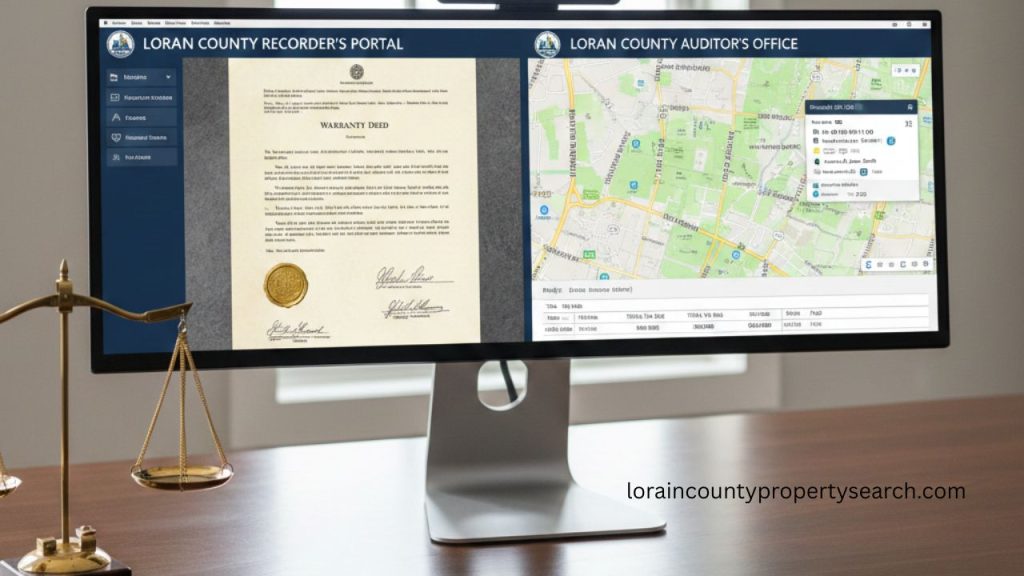
Lorain County property research commonly involves both the Auditor and the Recorder, but they should not be treated as interchangeable sources.

The Auditor helps you identify the property

Auditor property information can be useful for checking details such as the parcel, ownership information, assessed value, tax-related information and other property characteristics.

This is particularly helpful at the beginning of a search because it gives you a way to connect the property you see in everyday life with the county’s parcel information.

The Recorder holds recorded land documents

The Recorder is the more relevant source when your question concerns an actual recorded deed or another recorded instrument.

That distinction is important.

A sales or transfer result may tell you that a change occurred, but the recorded deed is the legal instrument associated with the transfer of an interest in real property. Your existing research notes make the same distinction: transfer information and a recorded deed are related, but they serve different purposes.

If you need to inspect the wording of the recorded document itself, a sales summary is not a substitute for the document.

Finding the Property Before Opening the Document

A common research problem is locating a deed without first making sure you have identified the correct property.

An address is useful, but it should not be your only check when the matter is important.

Match the parcel details

Once you locate the property, compare the available identifying information.

Look for consistency between:

  • Property address
  • Parcel number
  • Owner name
  • Property description
  • Relevant transfer information

This simple cross-check can prevent you from spending time researching a document connected with the wrong parcel.

Use the parcel number when you have it

A parcel number can be especially useful when several properties have similar addresses or when a property has changed through a transfer, split or other parcel-related event.

The goal is not to collect identifiers for their own sake.

The goal is to establish which piece of land the document actually concerns.

What to Look for Inside a Deed

Once you have located the relevant document, do not immediately jump to the signature or recording information.

First determine what the document actually identifies.

Check the parties

Look at the names of the parties involved in the conveyance.

If you are trying to establish a chain of ownership, compare the names in the document with the information you found in the county’s property records.

Differences in names deserve attention rather than being automatically treated as errors. Names can appear differently across records, and the context of the document matters.

Read the property description

The legal description is one of the most important parts of a deed.

It may identify the property through a subdivision reference, lot information or a more detailed description of the land.

Do not assume that the street address alone tells you everything contained in the legal description.

If the legal description is central to a boundary or ownership question, review the actual recorded document rather than relying solely on a property-search summary.

Note the recording information

Recording information helps you identify the document within the county’s land-record system.

Keep track of details such as the document or instrument number and other references provided with the recorded document.

These details become particularly useful if you later need to locate the same document again or compare it with another instrument.

A Deed Does Not Tell You Everything About a Property

This is where many online property searches go wrong.

Finding a deed does not automatically answer every question about the property.

For example, a deed may be relevant to ownership, but a person researching property taxes will need tax information. Someone evaluating a proposed development may need zoning and site information. A person investigating a boundary issue may need a survey or additional legal documents.

Match the record to the question

Think of county records as different pieces of a larger file.

Your questionInformation to focus on
Who is identified as the owner?Relevant ownership and recorded documents
What happened in a past transfer?Conveyance and recorded land records
What is the parcel’s tax information?Auditor property records
What does the legal description say?Recorded deed
Where is the parcel generally located?Parcel/GIS information
Is there a difficult legal or boundary issue?Relevant documents plus qualified professional review

This approach keeps you from asking one record to answer a question it was never designed to answer.

Be Careful With Older Deeds

Older property histories can require more patience than a recent transaction.

Not every historical document will necessarily be presented in the same convenient way as a recent online record. If an older document is missing from a modern search result, that does not automatically prove that the transaction never occurred.

Your research notes on property transfers make the same point for recent transactions: database visibility and record processing can affect when information appears online.

For older property histories, keep track of the references you find and follow the record trail rather than relying on a single search result.

How to Tell When You Need More Than One Document

Sometimes one deed answers your question.

Sometimes it creates another question.

For example, suppose you find a deed showing a transfer to the current owner. If your purpose is simply to identify that conveyance, the document may be enough for your immediate research.

But if you are trying to understand a complicated ownership history, you may need to work backward through earlier instruments.

The same applies when the property has undergone multiple transactions.

Build a record trail instead of collecting random documents

A useful sequence is:

Current property → relevant deed → earlier conveyance → earlier recorded document

Only continue backward when the previous document leaves an unanswered question.

This is more efficient than downloading every document associated with a property without knowing why you need it.

Do Not Treat a Sale Amount as the Property’s Current Value

A deed or transfer record can contain information about a transaction, but a recorded sale amount should not automatically be treated as today’s market value.

Your supplied transfer article correctly notes that some transfers may be exempt or may not represent a normal open-market transaction. It also recommends comparing several transactions and considering characteristics such as size, condition, location, land use and improvements.

That distinction is especially important for buyers and investors.

A recorded transaction is evidence of what was reported in that transaction. It is not automatically an appraisal of what the property is worth today.

What If the Deed and Property Search Show Different Information?

Do not immediately assume that one record is wrong.

First identify exactly what differs.

For example:

  • Is the owner’s name different?
  • Is the mailing address different?
  • Is the parcel number different?
  • Is the legal description different?
  • Are the dates different?
  • Are you comparing a current record with an older document?

The date and purpose of each record matter.

Follow the discrepancy

If the difference concerns a recorded legal document, examine the relevant land record.

If it concerns tax or parcel information, check the appropriate Auditor information.

If the issue affects legal ownership, title, boundaries or another significant property right, professional advice may be appropriate.

The important thing is to identify the discrepancy before trying to explain it.

When a Certified Copy Actually Matters

Not every person researching a deed needs a certified copy.

Someone conducting ordinary background research may only need to inspect the available record.

A certified copy can become important when a court, financial institution, title process or another organization specifically requires an officially certified document.

Before paying for certification, determine whether the organization receiving the document actually requires it.

That prevents an unnecessary request while still giving you the appropriate document when certification is genuinely needed.

A Better Way to Save Your Property Research

Property research becomes much easier when you keep a small record of what you found.

For each important document, save:

  • Property address
  • Parcel number
  • Document or instrument reference
  • Recording date
  • Names of relevant parties
  • Type of document
  • Why you saved it
  • Any question that remains unresolved

This is particularly useful when researching a property over several days or comparing multiple properties.

Instead of reopening the same searches repeatedly, you can see exactly what has already been checked.

When Online Research Is Not Enough

Online records are extremely useful for preliminary research, but some questions require more than a public search result.

Consider getting professional assistance when the issue involves:

  • A title dispute
  • A boundary disagreement
  • Complicated ownership
  • Interpretation of deed language
  • Easements or other property rights
  • A significant real-estate transaction

A property-record website can help you locate information. It should not be treated as a replacement for an attorney, title professional or licensed surveyor when the issue requires professional judgment.

A Practical Deed-Research Checklist

Before you consider your search complete, check five things.

Property identity

Have you confirmed the address and parcel information?

Document identity

Do you know exactly which deed or recorded instrument you are reviewing?

Legal description

Have you checked the property description instead of relying only on the street address?

Recording details

Have you saved the document reference and relevant date?

Unanswered questions

Is there anything important that the document does not establish?

If the answer to the final question is yes, that is your signal to continue the research rather than assume the missing information.

Why a Deed Search Should Be More Than a Name Search

Searching an owner’s name can be a useful starting point, but a name alone is not always enough to establish that you have found the correct property.

Names can be shared by different people, ownership can change, and one person or organization can be connected with multiple properties.

A stronger search connects the name with the specific parcel and recorded document.

That extra step is what turns a basic name lookup into meaningful property research.

Final Takeaway

Lorain County deed research becomes much easier once you stop treating every property record as if it answers the same question.

The Auditor can help you identify and understand the property record. The Recorder is the important source when you need the actual recorded land document. A deed can establish valuable information about a conveyance, but it does not automatically answer questions about taxes, development, boundaries or current market value.

The most reliable approach is straightforward:

Identify the parcel → locate the relevant recorded document → read the legal description → check the recording information → compare related records when necessary → get professional help when the issue becomes legal or technical.

That approach gives you a much clearer property history without turning a simple search into unnecessary paperwork.

Disclaimer: This article is provided for general informational purposes and is not legal, title, surveying, tax or real-estate advice. County records and procedures can change, and the appropriate official office should be consulted for current requirements. For legal ownership, title, boundary or document-interpretation questions, consult the appropriate qualified professional.

Frequently Asked Questions

Where can I find Lorain County deed records?

Recorded deeds are maintained through the Lorain County Recorder’s land-record system. The Auditor’s property information can also help you identify the parcel and connect the property with the relevant county records.

Can I search for a deed using an owner’s name?

A name can be used as a starting point for locating recorded documents, but it is better to confirm the result against the specific property or parcel you are researching.

What is the difference between a deed and a property transfer record?

A transfer or conveyance record provides information associated with a change involving real property. A deed is the recorded legal instrument documenting the transfer of an interest in the property. They are related but are not interchangeable.

Can a property deed tell me the property’s current market value?

No. A deed documents a legal transaction or interest; it should not automatically be interpreted as a current valuation. A recorded sale amount can be useful for research, but comparable transactions and property characteristics also matter.

What should I check if the deed and Auditor record do not match?

First identify exactly what is different and compare the dates and purpose of the records. If the discrepancy involves a recorded legal document, review the relevant land record. If it concerns ownership, title or another legal issue, consider professional advice.

Do I need a certified deed copy?

Only when the organization or process requiring the document specifically calls for certification. For ordinary research, viewing or obtaining a standard copy may be sufficient.

Can I rely only on an online property record?

For basic research, online records can be a useful starting point. For significant legal, title, boundary or financial decisions, verify the relevant information through the appropriate official record and qualified professional when necessary.

Why can’t I find an older deed online?

Historical records may require additional research when they are not readily available through a modern online search. Do not assume that a missing online result means the transaction never occurred.

When should I contact a title professional or attorney?

Consider professional help when you are dealing with disputed ownership, title concerns, complicated deed language, easements, boundary issues or another situation where interpreting the record could affect a major financial or legal decision.

Leave a Comment

Your email address will not be published. Required fields are marked *

Scroll to Top