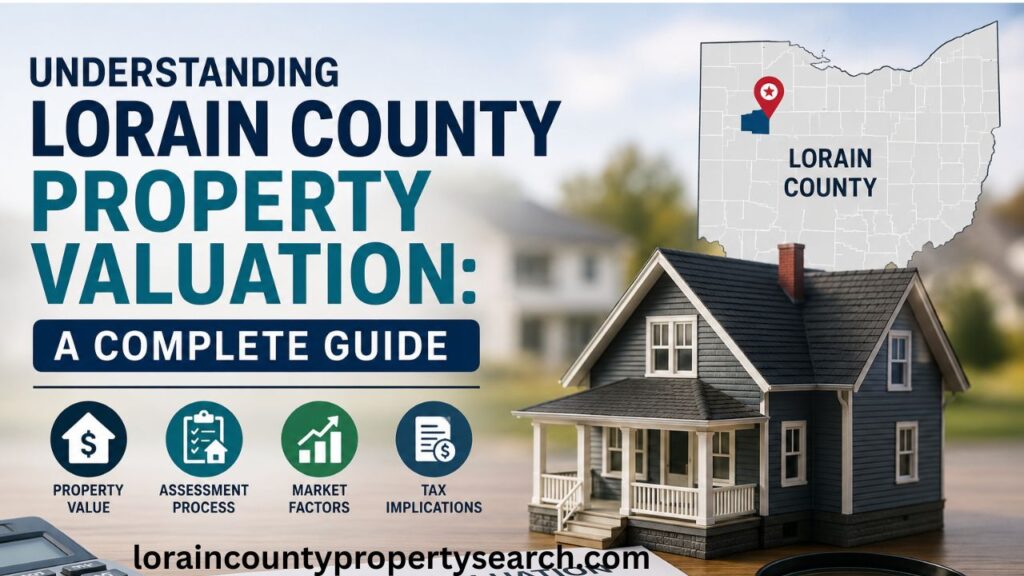
Property taxes are a significant part of homeownership, yet the process used to determine how much you owe remains a mystery to many. In Lorain County, Ohio, your property tax bill is directly tied to the Auditor’s Appraised Value and the Assessed Value.
This guide breaks down how the county determines your property’s value and how you can manage your tax liability effectively.
1. Appraised Value vs. Assessed Value (Key Differences)
Many homeowners confuse these two terms. Understanding them is the first step toward tax transparency.
| Feature | Appraised Value | Assessed (Taxable) Value |
| Definition | The Auditor’s estimate of Fair Market Value. | 35% of the Appraised Value (per Ohio law). |
| Purpose | Reflects general market conditions. | Used to calculate your actual tax bill. |
| Updates | Reappraisal every 6 years; update every 3 years. | Recalculated after every valuation update. |
Key Takeaway:
Your tax bill is calculated using the Assessed Value, not the market value. Because Ohio sets the assessment rate at 35%, even if your home value rises, your tax impact is moderated by this fixed ratio.
2. How the Auditor Determines Value
The Lorain County Auditor conducts a “Mass Appraisal” process. This doesn’t mean they visit every home individually. Instead, they:
- Analyze Market Trends:
They study recent “arm’s length” sales (fair market transactions) in your specific neighborhood. - Property Characteristics:
They track your home’s square footage, age, condition, and recent building permits. - Triennial Updates:
Every three years, the Auditor adjusts values to reflect current market conditions based on statistical data.
3. Challenging Your Assessment: The Board of Revision (BOR)
If you believe the Auditor’s valuation is higher than what your home would realistically sell for, you have the right to file a complaint with the Lorain County Board of Revision (BOR).
The BOR Appeal Process
- Filing Deadline:
You must file a DTE Form 1 (Complaint Against the Valuation of Real Property) between January 1 and March 31. - Burden of Proof:
In Ohio, the Auditor’s value is legally presumed to be correct.
You have the burden of proof to show otherwise. - Gather Evidence:
A successful appeal is rarely based on “feeling.” You need hard evidence:- Recent Sales: Comparable homes in your area that sold for less than your appraised value.
- Professional Appraisal: A report from a licensed appraiser.
- Repair Estimates:
If your property has significant defects, provide contractor invoices/estimates.
- The Hearing: If a stipulation (agreement) isn’t reached, you will attend a formal hearing to present your evidence.
4. Pro-Tips for Homeowners
- Check Your Tax Card:
Go to the official Auditor’s portal and review your “Property Card.” Ensure the data (square footage, bedrooms, bathrooms) is accurate. If their data is wrong, your value is likely wrong. - Wait for the Window:
You can only file one complaint per three-year assessment period unless a “qualifying event” occurs (e.g., the property was sold in an arm’s length transaction, a substantial improvement was added, or casualty damage occurred). - Don’t Guess:
Never guess your property’s value on the DTE Form 1. Use actual sales data or a professional opinion to justify your proposed value.
FAQs
Q1: Why did my property value increase if I haven’t done any renovations?
Property values are driven by broader market trends. The Lorain County Auditor performs a triennial update every three years to align assessments with recent home sales in your neighborhood. If nearby homes have sold for higher prices, your property’s value may be adjusted upward to reflect current market conditions.
Q2: Is there a fee to file a tax appeal with the Board of Revision?
No, there is no filing fee for submitting a complaint to the Lorain County Board of Revision (BOR). The process is designed to be accessible to property owners, though the burden of proof rests entirely on the filer to justify a change in valuation.
Q3: Can I request an informal review of my property value before filing a formal appeal?
Yes. Before the formal appeal window (January–March) opens, you can contact the Auditor’s office directly. While they may not change the value, they can review the property’s data (like square footage or bathroom count) to ensure no errors exist in the Auditor’s record.
Q4: If I file an appeal, could the Board of Revision actually raise my property value?
Yes, it is possible. When you file a complaint, you are asking the Board to determine the fair market value. If the Board finds that your property is significantly undervalued compared to current market sales, they have the legal authority to increase your valuation. This is why having solid evidence (comps) is vital before filing.
Q5: What are “comps” and how do they impact my assessment?
“Comps” (comparables) are recently sold properties with similar characteristics (age, size, location) to yours. The Auditor uses these as a baseline for mass appraisal. When filing an appeal, providing your own set of comps that sold for lower prices is the most effective way to challenge an assessment.
Q6: Does a certified copy of my assessment expire?
While the official record itself doesn’t “expire,” financial institutions and the Board of Revision typically require evidence that is current. For legal and financial transactions, aim to use documents that are dated within the last 30 to 90 days to ensure the information is up-to-date.