Property owners in Lorain County Ohio are experiencing noticeable increases in Real estate tax assessments. In 2026, Ohio home valuations have risen between 15% and 30%, directly affecting annual property tax obligations. With more than 171,877 parcels assessed countywide, even minor valuation inaccuracies can result in hundreds of dollars in overpayment each year. You Need to understand exemptions, reassessment cycles, and formal tax appeal procedures is essential to reducing your property tax liability legally and effectively.
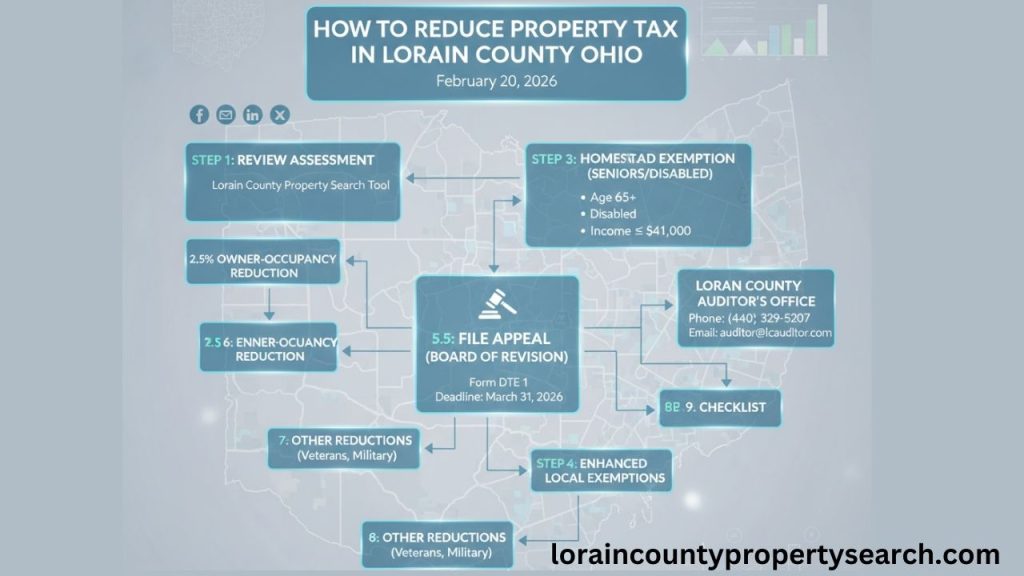
Step 1: Review Your Property Assessment
Start by checking your property record with Our Lorain County Property Search Free Tool.
Every property has an assessed value used to calculate taxes. Inaccuracies in your assessment can result in overpayment. Compare your home’s assessed value with recent sales of similar homes in your area to spot discrepancies.
How to Check Your Assessment
- Visit our online property search tool.
- Search by parcel number, address, or owner name
- Verify your home’s square footage, lot size, and property type
- Note the total market value assigned
Early review ensures you know exactly what the county believes your home is worth before applying for reductions or filing appeals.
Step 2: Apply for the 2.5% Owner-Occupancy Reduction
Homeowners who live in their primary residence can get a 2.5% reduction in their property taxes.
This simple credit reduces your bill directly. Many homeowners overlook this benefit or fail to confirm it is applied to their account.
How to Apply
- Confirm the reduction on your tax statement
- Contact the Auditor’s office if it’s missing
- Provide proof of primary residence if required
- Maintain eligibility by living in the home
Even a small percentage can save several hundred dollars annually, depending on your local tax rate.
Step 3: Apply for the Homestead Exemption (Seniors/Disabled)
The Homestead Exemption shields part of your home’s value from taxation. In 2026, it applies to up to $29,000 of market value for qualified residents, reducing taxes by $400–$450 annually.
Who Qualifies
- Age 65 or older
- Permanently and totally disabled
- Surviving spouse of a public safety officer killed in the line of duty
- Military veterans with a 100% service-connected disability rating
Income limits: total household Ohio MAGI ≤ $41,000 for 2025 income.
How to File
- Complete DTE 105A (Homestead Exemption Application)
- Attach proof of age or disability
- Include Ohio income tax return (or income worksheet if no return filed)
- Include a copy of driver’s license or state ID
- Submit to the Lorain County Auditor by December 31, 2026
Late applications may still be accepted, but earlier filing ensures you maximize savings.
Step 4: Utilize Enhanced and Local Exemptions
In 2026, Lorain County offers additional local “piggy-back” exemptions that supplement state benefits for seniors, disabled residents, and veterans.
If you already receive the standard Homestead Exemption, the extra reduction may be applied automatically. Confirm eligibility to ensure all benefits are received.
Examples of Local Enhancements
- Additional shielding of up to $29,000 for seniors or disabled
- Expanded benefits for veterans beyond the standard exemption
- Extra credits for surviving spouses of qualifying public safety personnel
These local enhancements can effectively double your state-level exemption, increasing overall tax savings.
Step 5: File a Property Valuation Complaint with the Board of Revision (BOR)
If your home is assessed above its market value, you can challenge it by filing a complaint with the Board of Revision.
This process allows you to legally reduce your assessed value, which lowers your taxes.
Steps to File an Appeal
- Complete Form DTE 1
- Gather evidence:
- Recent independent appraisal
- Comparable sales in your neighborhood
- Photos of structural damage
- Contractor repair estimates
- Submit the form to the BOR by March 31, 2026
- Attend the hearing if requested
A well-documented appeal often results in reduced assessments and significant tax savings.
Step 6: Check for Other Reductions
Beyond standard exemptions and appeals, certain homeowners may qualify for additional relief:
- Active-duty military: possible extensions or tax deferrals
- Veterans or surviving spouses with service-related benefits
- Homeowners behind on taxes can arrange payment plans with the Treasurer’s office to avoid penalties
Stay informed about changes each year to maximize all possible deductions.
Step 7: Keep Track of Deadlines and Documentation
Missing a filing deadline can delay your savings for a full year.
Key deadlines for 2026:
| Benefit / Action | Form | Filing Deadline |
|---|---|---|
| Homestead Exemption | DTE 105A | Dec 31, 2026 |
| Disabled Veteran Exemption | DTE 105I | Dec 31, 2026 |
| Board of Revision Appeal | DTE 1 | Mar 31, 2026 |
| Owner-Occupancy Credit | Auditor verification | Ongoing |
Always keep copies of all documents submitted and follow up to ensure your application is processed.
Step 8: Maintain Records for Future Reassessments
Property reassessments in Lorain County happen periodically. Keeping organized records of exemptions, appeal outcomes, and supporting evidence ensures that you remain eligible for reductions and can challenge future overvaluations efficiently.
Step 9: Practical Step-by-Step Checklist for 2026 Savings
Following these steps ensures homeowners can reduce property taxes legally, efficiently, and consistently.
Contact Information for Assistance
Lorain County Auditor’s Office can provide guidance:
Lorain County Administration Building
226 Middle Ave., Room 200
Elyria, OH 44035
Phone: (440) 329-5207
Email: auditor@lcauditor.com
Speaking directly with an official ensures accurate information for your specific situation.
Final Thoughts
Reducing property taxes in Lorain County is achievable when you follow the proper steps. By reviewing assessments, applying for exemptions, filing appeals, and tracking deadlines, you can save hundreds of dollars annually without violating state laws. Start early, gather proper documentation, and confirm eligibility for all available programs to maximize your 2026 property tax savings.
FAQs
1. What is the Homestead Exemption in Lorain County and who qualifies?
The Homestead Exemption lets certain homeowners reduce the taxable value of their primary residence, typically lowering their tax bill by hundreds of dollars. It’s available to homeowners who are 65 or older, totally and permanently disabled, or surviving spouses of first responders killed in the line of duty. Disabled veterans may qualify for an enhanced exemption with larger benefit amounts.
2. How do I apply for the Owner‑Occupancy Tax Reduction (2.5%)?
If your home is your primary residence, you may qualify for the owner‑occupancy credit, which reduces your tax bill by 2.5% on eligible levies. You must file the DTE 105C form with the Lorain County Auditor and show proof that you live in the home as of January 1.
3. What are the income limits for the Homestead Exemption?
For the 2025 tax year payable in 2026, the Ohio Homestead Exemption generally requires that a household’s Ohio Adjusted Gross Income (OAGI) does not exceed around $41,000 to qualify for the standard benefit. Disabled veterans with a 100% service‑connected disability generally have different eligibility rules.
4. How and when can I challenge my property’s assessed value?
If you believe your property’s assessed value is too high, you can file a complaint with the Board of Revision using Form DTE‑1, typically by March 31 each year. Supporting evidence like recent comparable sales, appraisals, or photos of damage can improve your chances of a successful appeal.
5. When are Lorain County property tax payments due?
Property taxes in Lorain County are generally paid in two installments: the first half due in mid‑February (around Feb. 13, 2026) and the second half due in mid‑July 2026. Paying on time helps you avoid penalties.
6. Can tax relief programs be renewed automatically?
Once approved, many exemptions like the Homestead Exemption or owner‑occupancy credit automatically renew each year as long as you continue to meet the eligibility requirements. However, it’s always good to review your status annually, update documents if your situation changes, and refile if required.